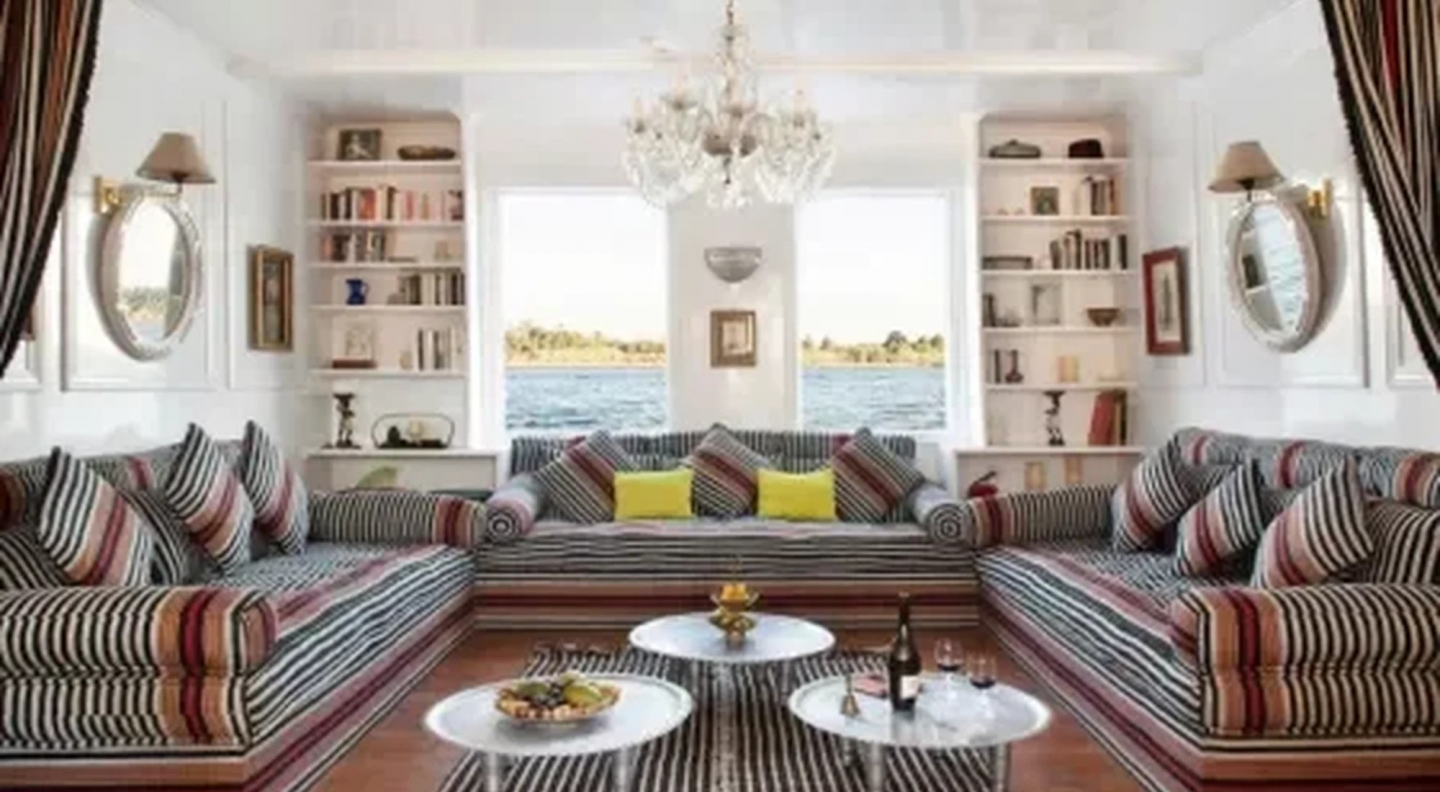


Eleven days built around four nights on a dahabiya from Esna to Aswan, with Giza and Luxor on either side and a private Egyptologist guide throughout.
A representative meets you at Cairo International Airport, handles the arrival procedures and drives you to your hotel in a private air-conditioned vehicle. The rest of the day is free.
Out to Giza with your private Egyptologist for the Great Pyramid of Cheops and the pyramids of Chephren and Mykerinos, then the Great Sphinx and the Valley Temple, where the mummification rites were carried out. Lunch at a local Egyptian restaurant, and the afternoon at the Egyptian Museum in Tahrir Square, whose collection is still the most important of its kind anywhere.
Breakfast, check out, and a flight to Luxor. Your guide takes you to the Karnak Temple Complex, the largest religious structure ever built and best known for its Hypostyle Hall, where the columns are tall enough and close enough together to change the light. Luxor Temple follows, once joined to Karnak by the Avenue of Sphinxes. Then to your hotel.
Across to the royal necropolis. The Valley of the Kings holds the tombs of Ramses II, Tutankhamun and many others, cut into the rock and decorated throughout. The Temple of Hatshepsut is next, built in terraces into the cliffs at Deir El Bahari, then the Colossi of Memnon. Back to the hotel for a quiet evening.
An hour's drive south after breakfast to Esna, where the Akhnaton Dahabiya is waiting. The Temple of Esna comes first, sunk below the level of the modern town, and then the local market. The boat sails on to El Kab, an old city of rock-cut tombs and temple ruins, and the first dinner is served either on board or on the bank.
The Dahabiya sails to Edfu, and a horse-drawn carriage takes you up to the Temple of Horus, one of the best-preserved temples in Egypt — the pylons and the carving are all still there to read. Lunch back on board, then a guided walk at Wadi El Shat, which is villages, palm groves and desert paths and no monuments at all.
Sailing to Gebel El Silsila, the sandstone quarries that supplied the stone for half the temples in Upper Egypt, with rock-cut chapels above them. After lunch, on to Kom Ombo, the rare twin temple built for Sobek and Horus the Elder. Dinner is served under the stars near Maniha.
A morning at Daraw, which was the last stop on the trans-Saharan camel route and still holds a camel market; the village around it is worth the walk. Then on to Koubania, a Nubian village set among mango and citrus groves, for the last evening on the boat.
You leave the Dahabiya at Aswan after breakfast and transfer to the airport for the flight north. A representative meets you in Cairo and takes you to your hotel; the rest of the day is your own.
The Grand Egyptian Museum first, the most modern museum in the country and built on a scale that takes a morning to walk. Then the Salah El Din Citadel and the Alabaster Mosque inside it, which is where you get the view back over the whole city. A medieval fortress after a new museum makes a better last day than two of either.
Breakfast and check-out, then a representative transfers you to Cairo International Airport for your final departure.