

A full day on Luxor's west bank: royal tombs, mortuary temples and the village where the tomb builders lived, with an Egyptologist guide.
You start with the two seated statues of Amenhotep III that have stood on the edge of the cultivation for more than 3,000 years. They are all that survives above ground of what was once the largest mortuary temple on the west bank, which tells you something about how much has been lost here.
From there to Deir El-Bahari and Hatshepsut's mortuary temple, built in three terraces straight into the limestone cliff behind it. Nothing else in Egypt looks remotely like it, and the way the architecture answers the rock face is the reason it is considered one of the great achievements of the ancient world.
A break for lunch at a local restaurant before the second half of the day.
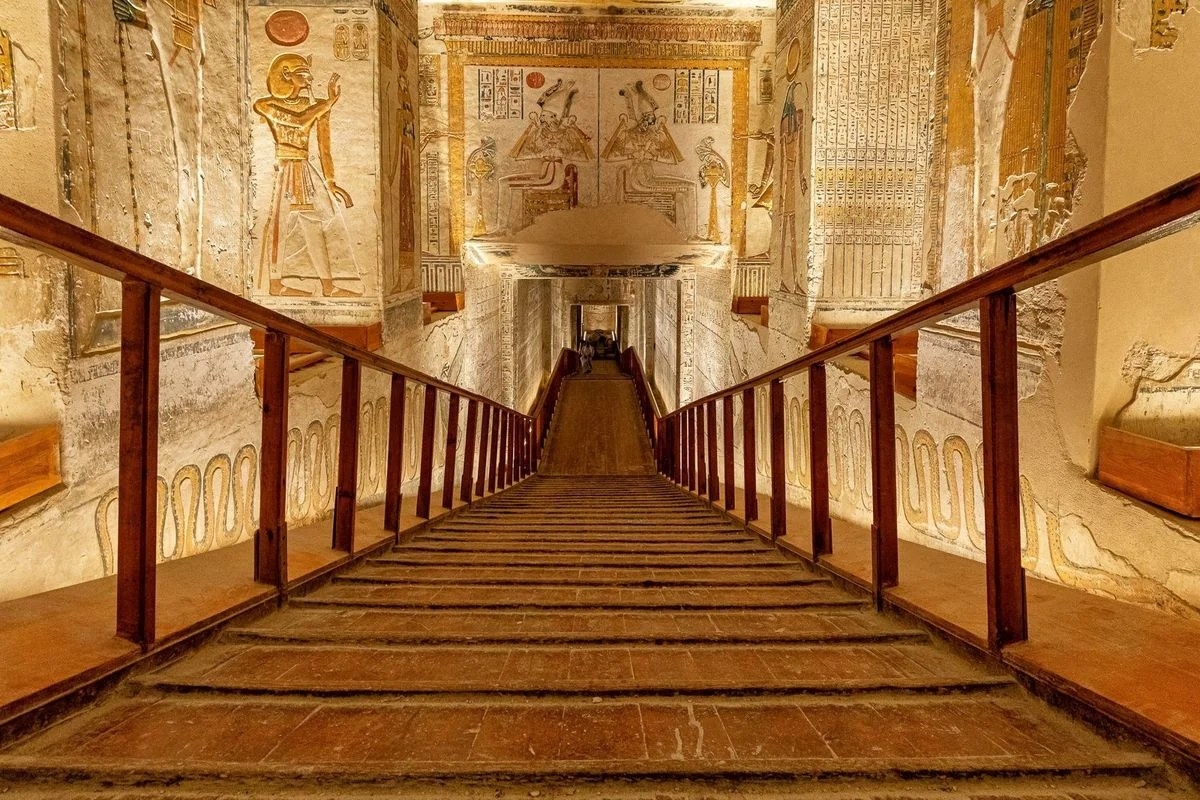
More than 60 royal tombs have been found in this valley, cut deep into the rock and painted from floor to ceiling with the texts the pharaohs needed for the journey after death. It became the most famous archaeological site in the world in 1922, when Tutankhamun's tomb was found here almost intact.
The mortuary temple of Ramses III is one of the most underrated monuments in Luxor. Its walls carry vivid, deeply cut reliefs of his military victories and religious ceremonies, and in places the original paint survives — which after a day of bare stone comes as a genuine surprise.
The last stop is the village where the tomb-builders lived: the craftsmen who cut and decorated the royal tombs, housed together in a walled settlement with their own tombs alongside. It is the closest you will get to the daily lives of ordinary ancient Egyptians rather than their rulers.
After the west bank you are driven back across the river to your hotel.