

Eleven days in December: four nights in Cairo, three on a five-star Nile cruise and three all-inclusive in Hurghada, with the entry visa and flights included.
A representative meets you at Cairo International Airport, handles the formalities and drives you to your hotel in a private air-conditioned vehicle. Nothing is scheduled: dine at the hotel or walk the streets nearby, which in Cairo is a decent first introduction on its own.
Your private guide takes you out to the plateau for the pyramids of Cheops, Chephren and Mykerinos, and the Great Sphinx, carved from a single block of limestone. A camel ride around the site is included. Lunch at a traditional Egyptian restaurant, then the Grand Egyptian Museum, the largest archaeological museum in the world, whose collection runs across 5,000 years and whose Tutankhamun galleries hold the gold together in one place.
A morning flight south to Aswan, a quieter city with a strong Nubian character. Your guide takes you to Philae Temple, built for Isis and standing on its own island, which is much of why it is the loveliest temple in Egypt. You board the boat afterwards, have lunch on deck, and the afternoon is free — the sun deck, or the Aswan markets for spices and handicrafts.
Optional: A visit to a traditional Nubian village, for the painted houses and the local hospitality
The boat sails north to Kom Ombo, whose temple is shared between Sobek, the crocodile god of fertility, and Horus the Elder, god of the sky, with the two halves mirroring each other exactly. Real crocodile mummies are displayed in the museum next door. On to Edfu, reached from the mooring by horse-drawn carriage, where the Temple of Horus stands almost complete, its gateways carved with the long fight between Horus and Set.
Down into the Valley of the Kings, where the decorated tombs set out what the Egyptians expected to happen after death in remarkable detail; Tutankhamun's own tomb can be entered. Then the Temple of Queen Hatshepsut, built against the cliffs at Deir el-Bahari, and the Colossi of Memnon, which have stood at Luxor for over 3,000 years. Lunch on board as the boat moves slowly towards Luxor.
You disembark after breakfast for the East Bank. Karnak is effectively an open-air museum in its own right, with columns, statuary and sanctuaries built for Amun-Ra over many centuries. The Avenue of Sphinxes runs from it to Luxor Temple, where the coronations were held. In the afternoon a private vehicle takes you across to Hurghada on the Red Sea, and you check in to your resort.
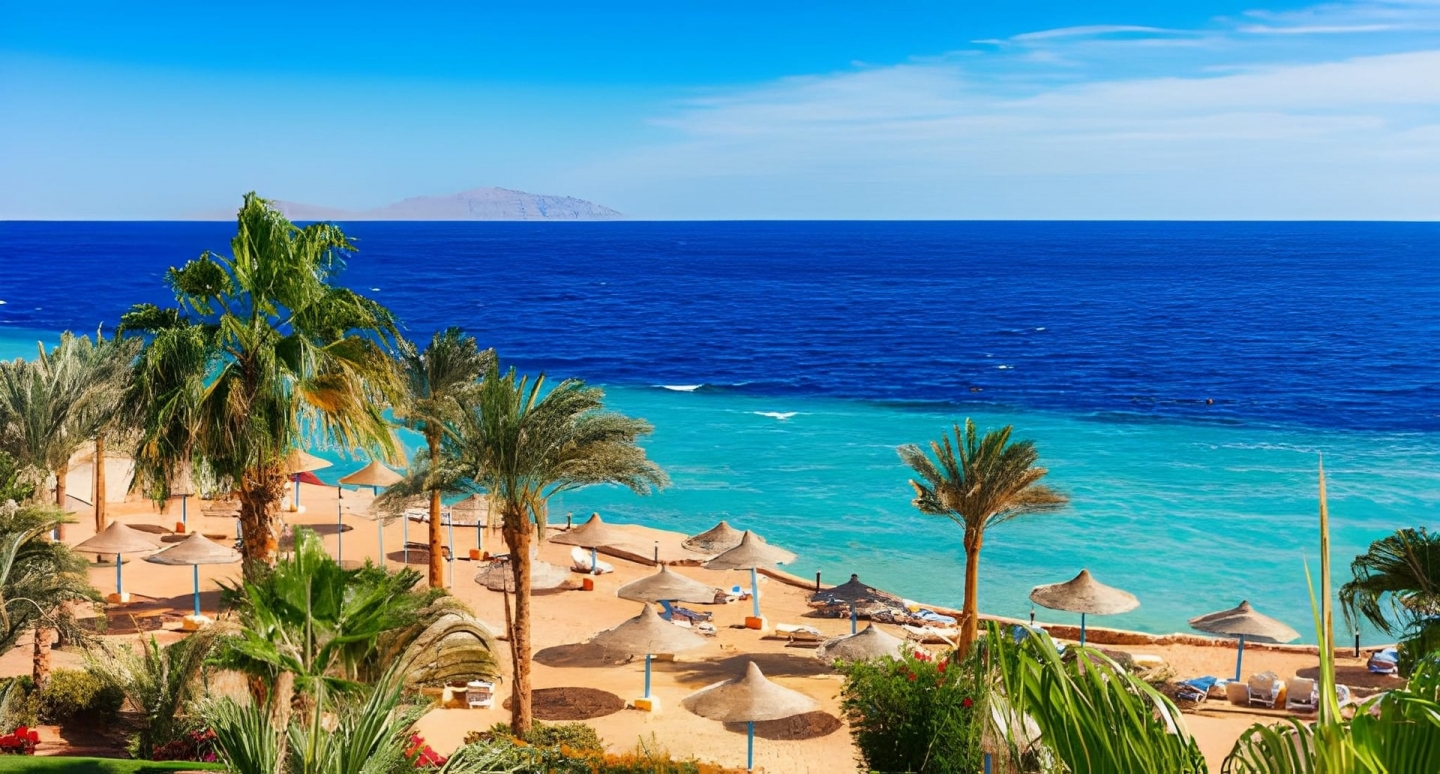
Breakfast over the water and the day is yours. The beach and the swimming are the obvious use of it; the reefs off this coast are among the best in the world and snorkelling or diving trips can be arranged as optional excursions. The marina is worth a walk in the evening.
Another day at the resort. Coffee by the pool, a spa treatment, or a 4x4 safari into the desert behind the coast if two days of sitting still is one too many.
A transfer to Hurghada Airport after breakfast and a short flight north. You check in to your Cairo hotel with the rest of the day free — Khan El Khalili for souvenirs, a Nile dinner cruise, or nothing at all.
The Egyptian Museum in Tahrir Square first, for the royal mummies, the jewellery and the gold mask of Tutankhamun. Then the Salah El-Din Citadel, the fortress that has looked down on Cairo since the twelfth century, and inside it the Mosque of Muhammad Ali with its alabaster and its view across the whole city. A farewell lunch at a local restaurant closes the day.
A last breakfast and check-out, then a representative takes you to Cairo International Airport for your flight home.